The New Frontier: Insurance Advertising in the AI Era and the Race to Stay Competitive
The companies leaning into AI today are the ones setting the pace for tomorrow.
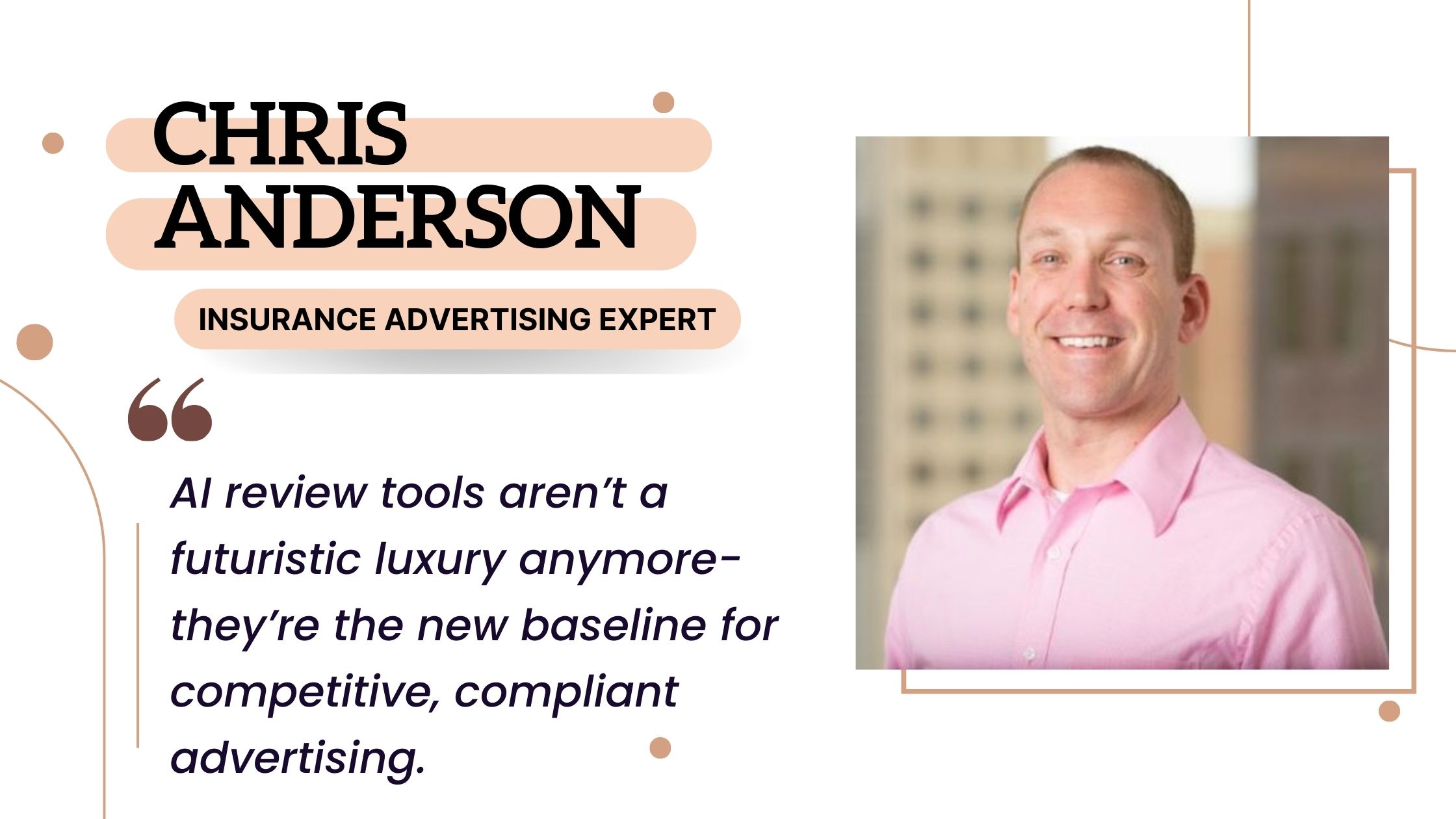
Guest Article by Chris Anderson
Artificial Intelligence (AI) has become a routine part of the lives, for everyone world wide, even if we don’t realize it. How many of us have said, ‘my phone is listening to me’ - you are right, it is all part of the AI in one way or another.
Most people think of the everyday, visible experiences that feel “smart” or automated when they think about AI. Across studies and consumer surveys, five categories consistently show up as the things the average person most readily recognizes as AI; Voice Assistants like AI (Siri, Alexa, ChatBot), Personalized Recommendations (Social Media, Online Stores, Streaming Services), Smart Email Features (Spam filters), Navigation/Maps (Google Maps, Waze), and Social Media Algorithms (Feed, Content, Filters). But who could forget items like ChatGPT or CoPilot - tools you might use to ask questions, generate a resume or a fun AI picture of yourself.
Is AI being used in Insurance Advertising?
As you probably guessed, this is something that is growing with many insurance carriers, even down the line to agents and influencers. Be careful of the bad actors though - ensure you are looking at legitimate insurance marketing and do your research. Not everything on the internet is what it appears to be.
Artificial intelligence is reshaping how insurers create, distribute, and optimize advertising-and with that shift comes a new layer of compliance expectations that feel familiar in some ways and entirely new in others. As marketing teams embrace AI‑generated videos, images, and copy, the compliance function becomes even more essential in ensuring that creativity doesn’t outpace regulatory guardrails. The core principles of insurance advertising haven’t changed, but the way content is produced, documented, and reviewed absolutely has. It needs to be verified for accuracy and disclosed in the same way a traditional ad is, with some additional steps to keep an eye on.
AI‑generated marketing content is certainly opening new creative doors for insurers, but it also introduces a fresh set of compliance responsibilities that look a lot like the ones we already manage with traditional production partners. Any time a brand uses an AI tool or outside vendor to create videos, images, or scripts, the first step is making sure the intellectual property rights are clean. That means having an agreement in place with the AI platform or production company that clearly addresses ownership and usage rights-and if a partner is generating the content, the brand should secure either a copy of their agreement or a written assurance that all IP issues have been properly cleared.
Once development begins, the scripting becomes just as important as the final product. Brands should maintain the exact prompts or scripts used to generate the AI content, because those scripts function the same way as storyboards or copy decks in traditional advertising. The insurance advertising compliance team needs to review those scripts before any videos are produced so they can confirm the accuracy of the messaging, identify potential regulatory issues, and provide the required disclosures. In many ways, AI‑generated videos should be treated no differently than videos created by an advertising agency with paid actors-the same standards, the same review expectations, and the same documentation requirements apply.
If the AI tool allows for on‑screen disclosures, compliance can guide where those disclosures should appear and how long they should remain visible. Ideally, disclosures should appear at the same time the related claim is made, but at minimum they can be placed on the end screen if timing or formatting limits real‑time placement. After the video is produced, the insurance advertising compliance team should complete a final review to ensure the finished product matches the approved script, includes the correct disclosures, and aligns with regulatory expectations.Without these foundations, even the most compliant message can become a legal risk if all the steps are not followed. The last thing you want to happen is for a Regulator to come back with concerns on the marketing piece or even legal action from another party based on IP rights.
Insurance advertising is being reshaped by AI in ways that feel both exhilarating and a little chaotic-especially for compliance teams who suddenly find themselves reviewing content that can be generated in seconds, scaled across dozens of channels, and personalized down to the individual consumer. The AI era isn’t just changing how ads are made; it’s changing how fast they move, how many versions exist, and how much oversight is required to keep everything compliant, consistent, and regulator‑ready. The questions surface - are you ready - do you even know if your company is using AI to create marketing pieces. Compliance should always ask the question, chances are your marketing team is using AI in some way.
How do you scale Insurance Ads with AI?
What do you think the answer to this could be…You scale insurance ads with more AI!
The only way to keep pace is to scale compliance alongside the content. That means shifting from manual review to AI‑assisted compliance frameworks that can:
Flag prohibited phrases or high‑risk claims
Detect missing disclosures
Compare new content to approved templates
Identify state‑specific regulatory issues
Track versions and maintain audit trails
AI doesn’t replace compliance judgment-it works in unison. AI can handle the volume so the compliance teams can focus on the nuance. Your compliance team sets the perimeters and gives it direction. Of course AI can’t be perfect in every situation, but it can head off a lot of the major issues that come up. Then your compliance team can focus their reviews in a more pointed way to specific items and potential red flags or concerns. When done well, AI becomes a partner that helps ensure every ad is accurate, transparent, and aligned with regulatory expectations before it ever reaches a human reviewer. Honestly, AI won’t replace your staff - but it will help them to be more efficient. They can now be trusted experts on the front end, rather than the bad guy on the end of the review citing corrections.
How does ChatGPT / CoPilot and other AI tools come into play?
If we are being honest, a lot of people are experimenting with AI daily and that also means staff at insurers are as well. AI can produce compelling ad copy, but it doesn’t inherently understand insurance regulations, state‑specific rules, or the difference between a benefit and a guarantee. It may seem like they do, but they could be off. You have to keep in mind that in the US each state/situs could vary their rules and opinions on topics. Though many states and insurance follow the standard NAIC, UDAP, and FTC guidelines when it comes to insurance advertising, AI could still miss something. AI is not perfect, even though it is a great tool. If your data inputs are unclear, missing a minor or major item, this could generate incorrect data really fast. That’s where compliance must step in.
When Using AI for Insurance Advertising - follow these steps:
Prompts should be documented like scripts or storyboards
Outputs should be treated as unvetted drafts
Marketing should vet all drafts prior to compliance review
Disclosures must be added manually or through automated compliance checks
Avoid asking ChatGPT for legal interpretations or regulatory guidance
Compliance must review the content before it’s used externally
Follow NAIC, UDAP and FTC guidelines for all marketing items
Follow your internal insurance advertising playbook - add a process for AI generated Ads
Marketing and Compliance is a partnership working for the same goal - more sales!
In the end, remember the AI is a great tool for a lot of reasons and Insurance Advertising is becoming another item where AI will assist marketing and compliance teams with insurance carriers to change the pace and content that is being produced. In the end, the insurance company is looking for sales … a successful campaign is sure to keep the brand top of mind for consumers.
The final question for insurance marketing and compliance professionals…
Do you have the AI review tools you need - your competition probably does.
Are you an insurance marketing or compliance professional? Do you work for a firm that works in insurance compliance?
The Insurance Advertising Compliance Association (IAdCA) is a grassroots, volunteer-led organization supporting professionals navigating the complex intersection of insurance advertising, compliance, legal, and marketing. IAdCA brings together professionals from across insurance and financial services to share best practices, learn from peers, network and navigate evolving advertising regulations. To learn more about IAdCA and the annual conference (April) visit their website at www.iadca.org.
About Chris Anderson
Potential Benefits
Think of Comply as a Junior Staff who gives Compliance Teams Superpowers
Speed-up compliance tasks, Focus on Core Things.
100+ hours
can be saved in a week across teams
Increase
Speed to Market