Regulatory Tracking Software vs. Regulatory Intelligence Software
Learn the difference between regulatory tracking software and regulatory intelligence software, and how AI helps insurance teams move from alerts to action.
Comply is Trusted by the Best in the Insurance Industry
Top-5 Life Insurer
First Consulting
Top Auto and Homeowners Insurer
Regulatory Tracking Software vs. Regulatory Intelligence Software
Regulatory tracking software and regulatory intelligence software are often used interchangeably, but they solve different problems.
For insurance compliance teams, this difference matters.
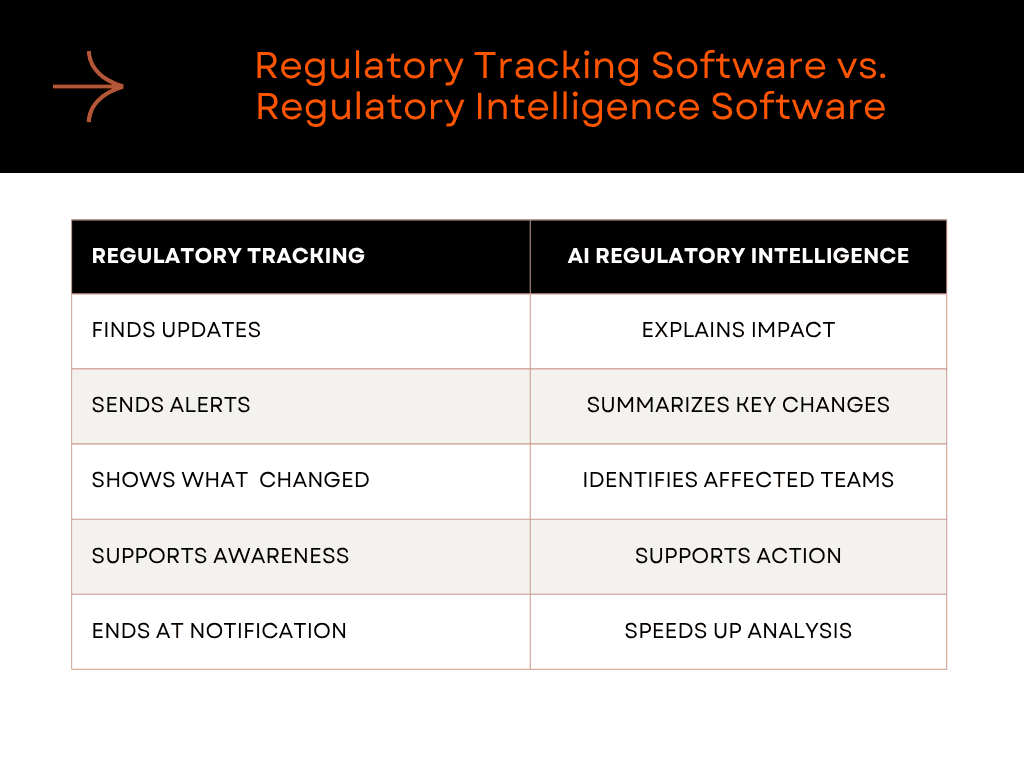
Tracking helps teams know that something changed. Intelligence helps teams understand what changed, who is impacted, and what actions need to be taken.
As compliance work becomes more complex, companies need more than alerts. They need a connected approach to AI for regulatory compliance that turns updates into action.
What Is Regulatory Tracking Software?
Regulatory tracking software helps teams monitor regulatory sources and identify new updates.
This may include:
Laws and regulations
Bulletins, notices, and orders
State insurance department updates
NAIC updates
Filing guidance
Compliance deadlines
The main goal is awareness.
Regulatory tracking software helps answer:
What changed?
When was the update published?
Which source did it come from?
Is there a deadline or effective date?
This is useful, but it is only the first step.
Once an update is found, compliance teams still need to read it, interpret it, assess impact, assign owners, and monitor completion.
What Is Regulatory Intelligence Software?
Regulatory intelligence software goes beyond tracking.
It helps teams understand the meaning and impact of regulatory updates.
With AI regulatory intelligence, compliance teams can summarize long regulatory documents, identify key obligations, assess business impact, and create action items for the right teams.
Regulatory intelligence software helps answer:
Why does this update matter?
Which products are impacted?
Which teams need to act?
What obligations or deadlines apply?
What evidence should be retained?
What should happen next?
This makes regulatory intelligence more action-oriented than basic tracking.
Key Difference: Alerts vs. Action
The biggest difference is simple:
Regulatory tracking tells teams that something changed.
Regulatory intelligence helps teams decide what to do next.
Why Insurance Companies Need Both
Insurance compliance teams operate across multiple states, products, filing types, and distribution channels.
A single regulatory update can impact:
Compliance
Legal
Product
Marketing
Sales
Claims
Operations
Policy Administration
Tracking helps make sure the update is not missed.
Intelligence helps determine whether the update affects advertising, filings, disclosures, deadlines, partner communications, or internal processes.
After that, teams still need AI compliance monitoring to track owners, deadlines, approvals, evidence, and completion.
That is why the strongest compliance programs connect all three layers:
Regulatory tracking
Regulatory intelligence
Compliance monitoring
How AI Changes Regulatory Tracking and Intelligence
AI makes regulatory workflows faster and more useful.
Instead of manually reading every regulatory update, AI can help:
Summarize long documents
Extract key obligations
Identify impacted products and teams
Highlight effective dates and deadlines
Recommend next steps
Connect updates to action items
Maintain evidence for audit readiness
This helps compliance teams move from reactive review to proactive regulatory change management.
How Comply Helps
Comply is an AI-powered compliance operating system built for insurance companies.
Comply helps teams track regulatory updates, summarize changes, assess impact, assign owners, monitor deadlines, review evidence, and stay audit-ready.
Instead of stopping at alerts, Comply helps insurance compliance teams move from regulatory tracking to regulatory intelligence and continuous compliance monitoring.
Conclusion
Regulatory tracking software helps teams know what changed.
Regulatory intelligence software helps teams understand what the change means.
For insurance companies, both are important. But tracking alone is not enough. Teams also need intelligence, ownership, monitoring, deadlines, and audit-ready evidence.
AI helps connect these workflows so compliance teams can move faster, reduce manual work, and respond to regulatory change with more confidence.
👉 Ready to move beyond regulatory alerts?
Comply helps insurance teams track regulatory changes, understand impact, monitor obligations, and stay audit-ready with AI.
Read our other articles
Potential Benefits
Think of Comply as a Junior Staff who gives Compliance Teams Superpowers
Speed-up compliance tasks, Focus on Core Things.
100+ hours
can be saved in a week across teams
Increase
Speed to Market