What Is AI Regulatory Intelligence?
AI regulatory intelligence helps insurance compliance teams summarize regulatory changes, assess impact, identify actions, and stay audit-ready.
Comply is Trusted by the Best in the Insurance Industry
Top-5 Life Insurer
First Consulting
Top Auto and Homeowners Insurer
What Is AI Regulatory Intelligence?
Insurance compliance teams need to monitor laws, bulletins, notices, orders, filing guidance, NAIC updates, SERFF activity, and state-specific requirements.
But finding regulatory updates is only the first step.
Teams also need to understand what changed, why it matters, who is impacted, and what actions need to be taken.
AI regulatory intelligence helps convert complex regulatory information into clear summaries, impact assessments, action items, and audit-ready evidence.
What AI Regulatory Intelligence Helps Teams Do
AI regulatory intelligence helps compliance teams:
Track regulatory updates across sources
Summarize long laws, bulletins, notices, and orders
Identify key obligations and deadlines
Assess impact by product, state, and department
Create team-wise action items
Monitor open obligations
Maintain evidence for audits and regulator questions
It helps teams move from manual regulatory tracking to faster, more actionable regulatory decision-making.
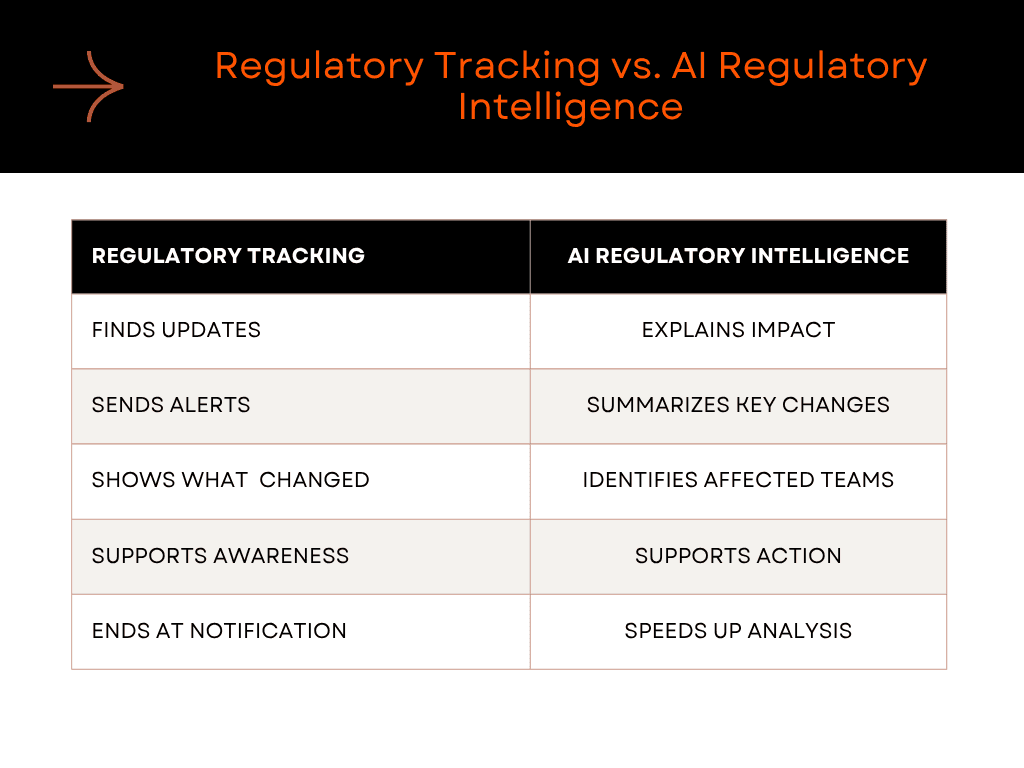
Regulatory Tracking vs. AI Regulatory Intelligence
Regulatory tracking tells teams that something changed.
AI regulatory intelligence helps teams understand what the change means and what to do next.
Both are important, but intelligence is what turns regulatory information into business action.
Why It Matters for Insurance Companies
Insurance compliance is complex because requirements vary by state, product, filing type, and distribution channel.
A single regulatory update may impact:
Compliance
Legal
Product
Marketing
Sales
Claims
Operations
Policy Administration
AI regulatory intelligence helps identify these impacts faster, so teams can assign owners, monitor deadlines, and document the response.
This reduces manual work, improves consistency, and helps teams stay audit-ready.
How Comply Helps
Comply is an AI-powered compliance operating system built for insurance companies.
Comply helps teams turn regulatory updates into action through:
AI summaries of laws, bulletins, notices, and orders
Team-wise impact assessment
Deadline monitoring
Regulatory change management
Advertising review
Filing review
Partner compliance
Evidence and audit trails
With Comply, insurance compliance teams can move from manual regulatory tracking to AI-powered regulatory intelligence and compliance monitoring.
Conclusion
AI regulatory intelligence helps insurance compliance teams understand regulatory change faster.
It summarizes updates, identifies impact, highlights deadlines, assigns actions, and supports audit-ready documentation.
For insurance companies, this means faster analysis, clearer ownership, fewer missed obligations, and stronger compliance visibility.
👉 Ready to turn regulatory updates into action?
Comply helps insurance teams summarize regulatory changes, assess impact, monitor deadlines, and stay audit-ready with AI regulatory intelligence.
Frequently Asked Questions (FAQs)
What is AI regulatory intelligence?
AI regulatory intelligence uses artificial intelligence to summarize, analyze, and interpret regulatory information.
How is it different from regulatory tracking?
Regulatory tracking identifies updates. AI regulatory intelligence explains what those updates mean and what actions may be required.
Why is AI regulatory intelligence useful for insurance companies?
Insurance companies manage complex requirements across states, products, filings, advertising, partners, and deadlines. AI helps teams analyze this information faster.
Can AI replace compliance teams?
No. AI supports compliance teams by reducing manual work and improving analysis. Final decisions should remain with compliance and legal professionals.
Potential Benefits
Think of Comply as a Junior Staff who gives Compliance Teams Superpowers
Speed-up compliance tasks, Focus on Core Things.
100+ hours
can be saved in a week across teams
Increase
Speed to Market